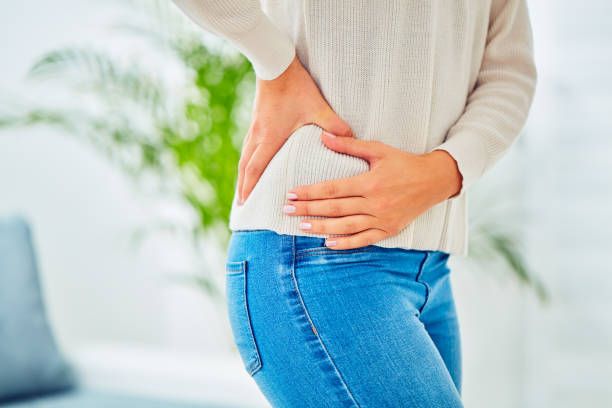
With daylight savings here many people suddenly increase their walking volume to make the most of the twilight. While we love an active community the lack of progressive loading can lead to a number of common injuries presenting to the clinic. Including Plantar fascia pain, Achillies Patella Tendon injuries and Gluteal pain. Early intervention is the answer to keep our community active. Libby shares some recent clinical gems.
There are weeks in clinical practice as a physiotherapist where it feels like déjà vu—patient after patient walks into the room, settles into the chair cross-legged, and begins the all-too-familiar story of stubborn lateral hip pain. Is it sciatica? A muscle tear? Maybe bursitis? More often than not, the answer lies in a condition that does not always get the spotlight it deserves: Greater Trochanteric Pain Syndrome (GTPS).
What is GTPS?
GTPS is an umbrella term and clinical diagnosis for a group of issues in this area (1). This includes trochanteric bursitis, gluteal tendinopathies, and glute medius or minimus tears, or if you are unlucky a combination of all three! (1)
Fortunately, the research around this condition and how best to manage it has come a long way in recent years. GTPS can first be diagnosed with a thorough assessment of the person’s history and symptoms, followed by using a cluster of objective clinical tests, and does not necessarily require imaging (1)(2)(3).
How is GTPS diagnosed?
MRI use for diagnosis of GTPS is highly debated. A test cluster has been identified to confirm a GTPS diagnosis, and when all tests are positive it has a 99% probability of diagnosis (3).
· Pain with palpation over the greater trochanter
· Pain with resisted side-lying hip abduction
· Pain reproduced with 30-seconds single-leg stance
Clinical Gem: GTPS cannot be diagnosed by palpation alone, but it is a helpful test when paired with resisted hip abduction and single-leg stand. (3)
It is important to recognise the role tendon load plays in the development and amplification of GTPS. Initial management needs to be focused on reducing compressive load through the gluteal tendons to allow symptoms to settle down (1)(4). The chart below advises people on positions and activities to avoid as they can tend to overload the gluteal tendon.
It is important to:
✅ Sleep on your back with a pillow under your knees to reduce tension in the gluteal tendons, OR sleep on the non-painful side with a pillow between your knees to keep hips aligned and reduce tension.
✅ Sit with both feet flat on the floor and knees aligned (avoid hip adduction).
✅ Stand evenly on both legs, weight distributed equally.
✅ Use a step or stool under one foot when standing for long periods to shift load gently.
✅ Encourage gentle movement and walking, respecting pain limits.
✅ Educate on load management – gradual return to activities, controlled loading.
CLINICAL GEM:
GTPS is not caused by tight muscles or iliotibial band tightness – stretching these muscles is ineffective in this scenario and will only further aggravate the person’s symptoms.
The role of physio and strengthening exercises
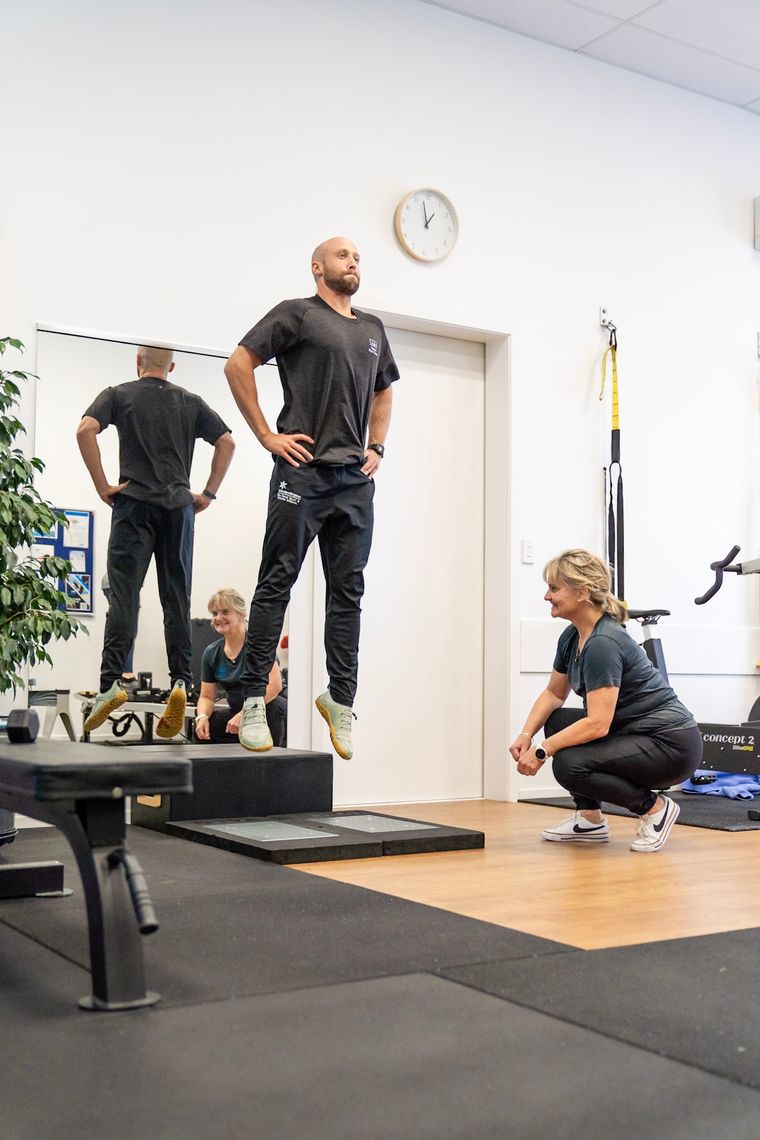
Optimising and improving gluteal control and strength is the cornerstone of physiotherapy management. This does not mean cookie-cutter prescriptions of clamshells and glute bridges! But rather an individualised, comprehensive exercise programme that gradually loads the tendon and strengthens the gluteal muscles so that they become conditioned to tolerate normal loading. (5)
References:
Speers CJ, Bhogal GS. (2017). Greater trochanteric pain syndrome: Review of diagnosis and management in general practice. Br J Gen Pract, 67(663), 479–480.
Disantis A, Andrade AJ, Baillou A, et al. (2023). ISHA physiotherapy consensus on assessment and treatment of GTPS. J Hip Preserv Surg, 10(1), 48–56.
Kinsella R, et al. (2024). Diagnostic accuracy of clinical tests for GTPS: Systematic review and meta-analysis. J Orthop Sports Phys Ther, 54(1), 26–49.
Ganderton C, Semciw A, Cook J, Pizzari T. (2018). Gluteal loading vs sham exercises in postmenopausal women with GTPS. J Women’s Health, 27(6), 815–829.
Grimaldi A, Fearon A. (2015). Gluteal tendinopathy: Integrating pathomechanics and clinical features. J Orthop Sports Phys Ther, 45(11), 910–922.
Mellor R, Bennell K, Grimaldi A, et al. (2018). Education + exercise vs corticosteroid vs wait and see for gluteal tendinopathy. Br J Sports Med, 52(22), 1464–1472.
Found these clinical gems useful?
Reach out on Linked In to discuss or see when our next Learn At Lunch session is!